At a Glance
Compared to this destination's peak season
Kyoto in September — Travel Guide
By Harry Nara · Last updated
Kyoto in September offers some of the best conditions of the year, ideal for smart travellers & budget seekers. Expect temperatures of 21–29°C, around 11 days of rain, and low–medium crowds across the city. Daily budgets typically land around ¥9,000–16,000 for mid-range travellers. Rooms are easy to find last-minute and hotel prices stay noticeably softer through the season.
Contents14 sections
#Weather in Kyoto in September
Kyoto in September averages 21–29°C (70–84°F) with around 11 days of rain, and crowds are low–medium.
| Measure | September in Kyoto |
|---|---|
| Daytime high | About 29°C / 84°F |
| Overnight low | About 21°C / 70°F |
| Wet days | About 11 |
| Sunset | 6:24pm on the 1st, 5:43pm by the 30th |
| Typhoons | The peak of the season for western Japan |
| Crowds | Among the lowest of the year, except the holiday weekend |
Figures are Japan Meteorological Agency 1991–2020 normals for Kyoto.
What that actually means for your trip:
- Two months in one. The first ten days still feel like August, hot and sticky, with afternoons above 30°C. By the last week the mornings are fresh, the humidity has gone and walking all day becomes easy again.
- Typhoons are the wild card. September is the busiest month for typhoons reaching western Japan. A direct hit on Kyoto is uncommon, but one passing nearby brings a day of heavy rain and suspended trains, usually followed by a clear, washed-out sky.
- The light goes early. Sunset moves forty minutes earlier across the month, to before six by the end of it, so a temple day starts better at 8am than at 10am.
- It is a lull. Summer holidays are over and the autumn-leaf crowds have not arrived, so hotel rates sit closer to winter than to November.
Is September a good time to visit Kyoto? Yes, especially the second half. You get the quietest major sights of the warm months and the best hotel prices before the autumn rush, and the weather improves by the week. The trade is a typhoon risk you cannot plan away, and the fact that there are no autumn leaves yet; those come in November. If you have the choice, arrive after the middle of the month and keep a free day in your plan.

#What to Do in Kyoto in September

Fushimi Inari, early or late
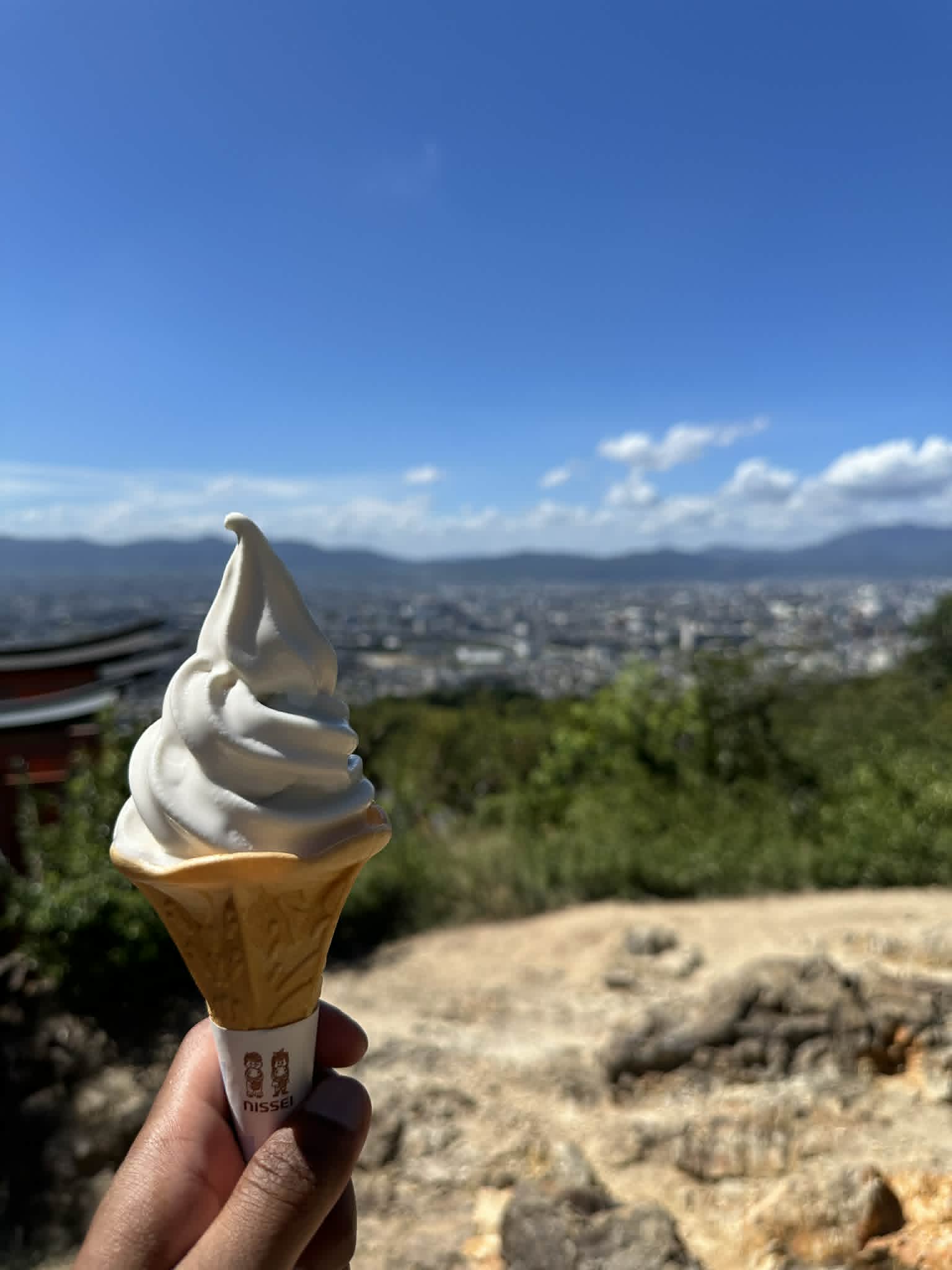
The thousands of vermilion torii at Fushimi Inari are open all day and night and free. In early September climb at 7am or after 5pm, when the hill is shaded and cooler; by the last week of the month the full walk to the summit, about two to three hours there and back, is pleasant at any hour. Most visitors turn back at the Yotsutsuji intersection, about halfway, where the view over the city opens up, and beyond it the paths are quieter.
Karasu Sumo at Kamigamo Shrine
On 9 September, a Thursday in 2027, Kamigamo Shrine in the north of the city holds the Karasu Sumo, the crow sumo, as part of its Choyo festival. Two priests hop sideways around the ring and call out like crows, then local boys wrestle in a series of bouts before the shrine. It is free and short, and one of the strangest and most charming rituals in Kyoto's calendar. Arrive in the morning and find a spot by the ring early.
Moon viewing and the equinox
September's full moon, the harvest moon, falls around 15 September in 2027. Temples and shrines hold moon-viewing evenings, known as tsukimi or kangetsu, around it; the best known is at Daikaku-ji in Arashiyama, where dragon-headed boats float on the Osawa Pond under the moon. Dates are set each year by the temples themselves, so check their own sites before you plan around them.
Around the autumn equinox on Thursday 23 September 2027, the red higanbana, spider lilies, bloom along the edges of rice fields and riverbanks; the paddies of Ohara and the countryside around Sagano are good places to see them, with the rice harvest under way.
The last of the riverside platforms
The kawadoko season continues until 30 September.
The restaurants along the Kamo River between Nijo and Gojo serve dinner on wooden platforms built out over the riverbank, and in Kibune, north of the city, platforms sit over the stream itself. September evenings, cooler than August's, make them more comfortable; book a few days ahead.
Solo Travellers
Ride the Eizan Railway from Demachiyanagi to Yase and take the cable car and ropeway up Mount Hiei to Enryaku-ji, the mountain monastery where Japanese Buddhism's major schools took shape. In late September the air on the mountain is clear and cool.
Couples
Go to Kinkaku-ji at its 9am opening (¥500), before the tour groups, then walk on to Ryoan-ji's rock garden. In the evening, book a kawadoko dinner on the Kamo River or in Kibune before the platforms close for the year.
Families
The Kyoto Railway Museum by Umekoji Park and the Kyoto Aquarium next to it make a full indoor day for a wet morning.
The monkeys of Iwatayama Monkey Park in Arashiyama are easier company in late September than in August's heat, and the climb is short.
Groups
The sake breweries of Fushimi, with Gekkeikan's museum among them, suit a group in any weather, with tastings at the end.
A cooking class or a market walk through Nishiki is easy to arrange for six or more.
#Getting Around
From Kansai International, the JR Haruka reaches Kyoto Station in about 75 minutes; from Tokyo, the Nozomi shinkansen takes about 2 hours 15 minutes. When a typhoon approaches, JR West and the private railways announce suspensions the day before, often for a planned window of several hours, so check the evening before any day trip.
A city bus ride is ¥230 and the Subway and Bus 1-Day Pass ¥1,100. Kyoto plans a higher bus fare for visitors, about ¥350–400, during fiscal 2027, which runs from April 2027 to March 2028, so it may already apply by September; check before you buy passes. In September the buses are far less crowded than in spring or autumn, but the subway and the Keihan and Hankyu lines still beat them to Fushimi, Gion and Arashiyama.
#Budget & Costs
| Travel style | Per day | What it covers |
|---|---|---|
| Budget | ¥9,000–14,000 | Hostel or capsule bed, set lunches, buses, two temples |
| Mid-range | ¥18,000–30,000 | Business hotel, restaurant meals, a taxi when needed |
| Luxury | ¥60,000+ | Ryokan with kaiseki, private guides |
September is one of Kyoto's best-value months, with hotel rates closer to winter than to the autumn-leaf season; the one exception is the Respect for the Aged Day weekend, Saturday 18 to Monday 20 September 2027, when domestic travellers fill the city.
Costs worth knowing:
| What | Price |
|---|---|
| City bus, single ride | ¥230 (visitor fare planned for fiscal 2027) |
| Subway and Bus 1-Day Pass | ¥1,100 |
| Kinkaku-ji | ¥500 |
| Fushimi Inari | Free |
| Karasu Sumo | Free |
- Kyoto's accommodation tax has scaled with the room rate since 1 March 2026, from ¥200 to ¥10,000 per person per night, paid on top of the room.
- The visitor bus fare may apply by September 2027; check the rate before you rely on the 1-Day Pass.
- Kawadoko dinners are set menus and cost more than the same restaurant's indoor meal.
#Food & Dining

September is the turning point in Kyoto's kitchen:
- Hamo, the pike conger eel of Kyoto's summer, is still on the menus in early September.
- Matsutake, Japan's most prized mushroom, begins to appear, mostly imported at first, with the Japanese crop arriving towards October.
- Tsukimi dango, small white rice dumplings, are sold in sweet shops around the harvest moon.
- Kuri, chestnuts, start to appear in sweets and rice dishes later in the month.
For a kaiseki dinner that marks the change of season, Kikunoi and Hyotei are among the city's most celebrated, and both need booking well ahead.
Nishiki Market is the place for a grazing lunch.
#Nightlife
September evenings are the best of the warm months.
Pontocho's narrow lane, between the Kamo River and Kiyamachi, is lined with restaurants and small bars; Kiyamachi-dori along the Takase canal has more casual bars. Kyoto is not a late-night city, and many restaurants take last orders around 9 or 10pm.
#Shopping
Nishiki Market sells food, knives and tea; Teramachi and Shinkyogoku, the covered arcades next to it, sell everything from stationery to antiques and are dry on a rainy day.
Ippodo on Teramachi is one of Kyoto's oldest tea merchants.
The department stores Daimaru and Takashimaya on Shijo have autumn sweets in their food halls from the start of the month.
#Culture & Etiquette
- Photography is banned on Gion's private lanes, and maiko and geiko should never be stopped for photos.
- The Karasu Sumo is a religious ceremony; watch quietly and stay outside the ring's rope.
- Remove your shoes in temple halls; slip-on shoes save time.
- Moon viewing is quiet; at temple events, keep voices low.
- Tipping is not done, and can cause confusion.
#Essential Local Phrases
| Japanese | Romaji | When you'll use it |
|---|---|---|
| 台風 | Taifuu | Typhoon |
| 運休ですか | Unkyuu desu ka | Is the train suspended? |
| お月見 | Otsukimi | Moon viewing |
| 涼しいですね | Suzushii desu ne | "It's cool, isn't it?" |
| 傘 | Kasa | Umbrella |
| 美味しいです | Oishii desu | Delicious |
| お勧めは何ですか | Osusume wa nan desu ka | What do you recommend? |
| ありがとうございます | Arigatou gozaimasu | Thank you (formal) |
#Packing List
- Light, breathable clothes for the first half of the month
- A light layer for late-September evenings
- A folding umbrella and a light rain jacket
- Comfortable walking shoes with grip, for wet temple paths
- Slip-on shoes for temple halls
- Sunscreen and a hat
- A refillable water bottle
- Insect repellent for evenings by the river
- An IC card (ICOCA) for buses and trains
- Cash for small temples, shrines and restaurants
#Backup Plans
If a typhoon stops the trains: stay central.
The covered Teramachi and Shinkyogoku arcades, Nishiki Market and the department stores on Shijo let you spend a day under cover, all within walking distance of each other.
If it is too hot in early September: see the outdoor temples in the first hours after opening, then spend the afternoon at the Kyoto National Museum or Sanjusangen-do, with its thousand statues of Kannon in a single long hall.
If the moon is hidden by cloud: the temple moon-viewing events usually go ahead anyway, with tea and music, and the gardens are lit; the full moon itself is a bonus.
#Safety & Health
Kyoto is one of the safest cities in the world. September's risks are practical: heat exhaustion in the first part of the month, so drink water and rest in the shade; typhoons, so follow the forecast and the railways' announcements; and slippery wooden verandas and stone paths after rain. Mosquitoes are busy by the river at dusk. Tap water is safe.
Emergency: 110 for police, 119 for fire and ambulance.
#What's New for September 2027
- The Karasu Sumo at Kamigamo Shrine is on Thursday 9 September
- The harvest moon falls around 15 September, with temple moon-viewing evenings around it
- Respect for the Aged Day is Monday 20 September and the autumn equinox Thursday 23 September
- The kawadoko season on the Kamo River and in Kibune ends on 30 September
- Kyoto's visitor bus fare is planned for fiscal 2027 and may apply by September
#About This Guide
By Harry Nara (founder of WhenToWander), updated October 2026 for September 2027. Climate figures are Japan Meteorological Agency 1991–2020 normals. Dates and prices verified against:
- Japan Meteorological Agency for climate normals
- Kamigamo Shrine for the Karasu Sumo
- National Astronomical Observatory of Japan for the 2027 holidays and the harvest moon
- Daikaku-ji for moon viewing
- City of Kyoto for the accommodation tax
For the season ahead, see Kyoto in autumn, and for the festival month that follows, Kyoto in October.
You might also like
Destinations picked for travellers with similar taste or climate.
Frequently Asked Questions
Is September a good month to visit Kyoto?
Yes — if you wait until after the first week. Early September is still hot and humid with lingering summer heat. From mid-September, daytime highs drop to 27–30°C and humidity finally eases. Crowds are low between summer holidays and the autumn rush, hotel rates ease, and the rice harvest in nearby villages is photogenic.
Are typhoons a risk in Kyoto in September?
Yes — September is peak typhoon season for western Japan. Direct hits on Kyoto are uncommon but can cause heavy rain and disrupted trains for 24–48 hours. Travel insurance with weather coverage is wise. Most typhoons pass quickly and the days after are often spectacularly clear.
What festivals are in Kyoto in September?
The Karasu Sumo at Kamigamo Shrine is held on 9 September every year, a Thursday in 2027: priests hop and caw like crows, then local boys wrestle. Around the harvest moon, about 15 September in 2027, temples such as Daikaku-ji hold moon-viewing evenings, and the Hagi Matsuri at Nashinoki Shrine celebrates the bush clover in late September.
Is September a good time for autumn leaves in Kyoto?
No — it’s too early. Autumn leaves don’t begin properly until mid-October at the earliest, with peak in mid-November. September is the shoulder month between summer heat and autumn colour — great for hotel value and low crowds, but not for foliage.
What’s the weather like in Kyoto in September?
Kyoto in September typically sees temperatures of 21–29°C with around 11 days of rain across the period. Pack lightweight layers that suit both cooler mornings and warmer afternoons.
How much does it cost to visit Kyoto in September?
Budget-conscious travellers can expect daily costs of ¥9,000–16,000, covering accommodation, food, and local transport. Quieter periods usually push prices toward the lower end of this range.